
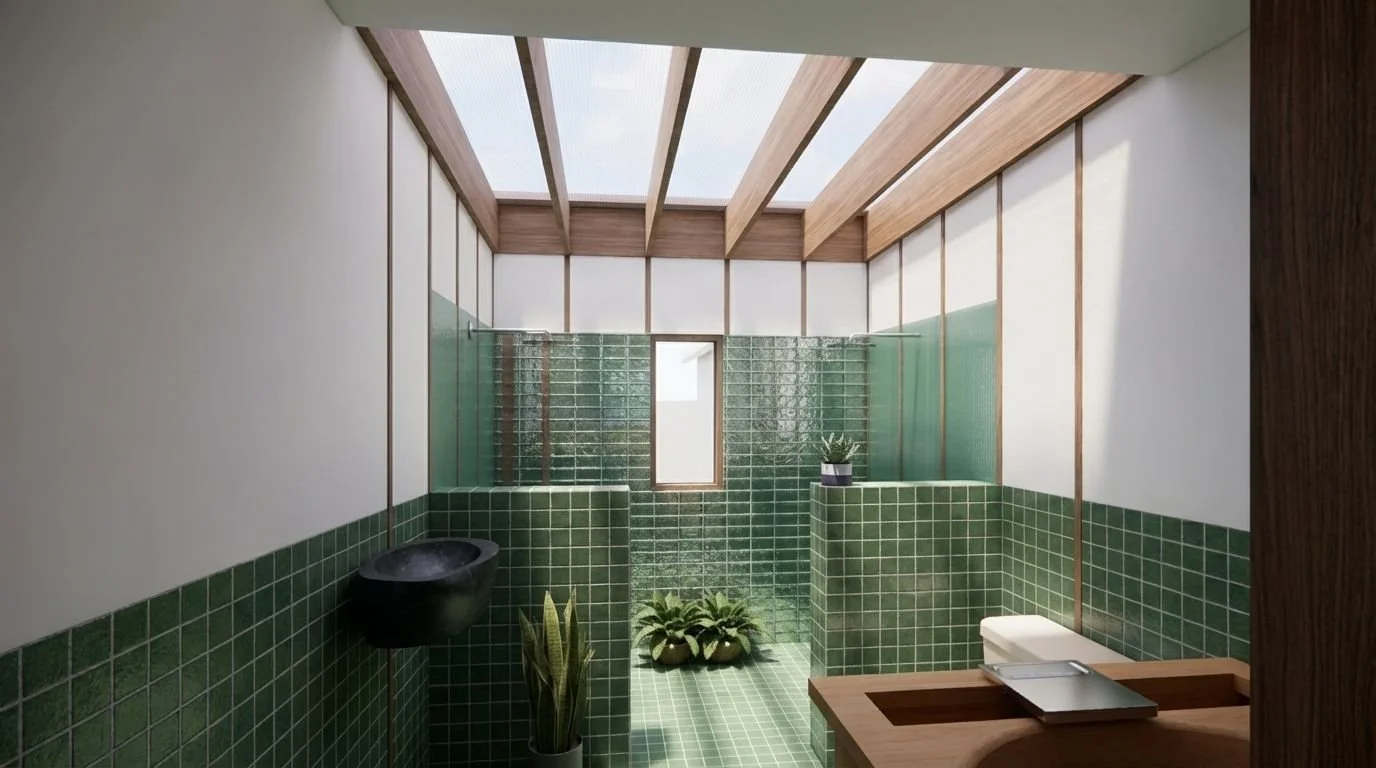
Biophilic Design for Melbourne Homes: Bringing Nature Into Your Architecture
A practical guide to designing with nature for health, comfort, and lasting value.
Key takeaways
- Biophilic design is a research-backed approach to architecture that connects people with nature through light, materials, space, and greenery, improving health and daily comfort
- Homes designed with biophilic principles reduce physiological stress, improve sleep quality, and support cognitive performance in occupants
- Melbourne's temperate climate and strong indoor-outdoor living culture make it one of the most natural places in Australia to apply biophilic thinking
- Practical strategies range from repositioning windows to frame garden views, through to internal courtyards, green walls, and natural material palettes
- Properties with biophilic design features typically attract an 8% to 20% premium over comparable homes
- Biophilic design overlaps significantly with passive solar principles and the NCC energy efficiency requirements already shaping Melbourne homes
What does a biophilic home feel like?
Morning light falls through a clerestory window and warms the timber floor beneath your feet. A breeze carries the scent of lemon myrtle through an open courtyard door. From the kitchen bench you watch a magpie land on the grevillea outside, framed by a window placed precisely for this purpose. Rain drums lightly on a metal roof. The stone benchtop is cool under your palm.
This is what biophilic design feels like in a Melbourne home. Not a botanical garden or a wellness retreat, but a house that has been shaped around its site, its climate, and the natural systems that surround it. And notice: that description engaged every sense, not just sight. The warmth of the light, the scent of the garden, the sound of rain, the texture of stone. Biophilic design is a whole-body experience.
Biophilic design in Melbourne is gaining attention among homeowners and architects because it addresses something many renovations overlook: how a home actually makes you feel. Beyond the floor plan and the finishes, biophilic architecture asks a deeper question. What is the quality of light in the living room at 4pm? Can you hear birds from the bedroom? Does the material under your hand feel alive or inert?
This guide explains what biophilic design means in practical terms for Melbourne homes, why the evidence behind it matters, and how to apply its principles to a renovation, extension, or new build in Victoria.
Dadirri is a word from the Ngan'gikurunggurr and Ngen'giwumirri languages of the Daly River region in the Northern Territory. Shared with the world by Elder Dr Miriam-Rose Ungunmerr-Baumann AM, it describes a practice of inner, deep listening and quiet, still awareness. It is the act of sitting with country, listening to its rhythms, and allowing understanding to emerge in its own time. Aboriginal peoples have practised this deep attentiveness to the natural world for tens of thousands of years. We named our practice after this concept because we believe the best architecture begins the same way: by listening deeply to a site, its light, its sounds, its seasons, and the life that moves through it, before drawing a single line.
 Natural light, timber floors, and a seamless connection to the garden. These are not decorative choices but architectural strategies that measurably improve how a home feels to live in.
What biophilic design actually means
The term biophilia was introduced by biologist E.O. Wilson in 1984. It describes the innate human tendency to seek connection with other living systems. Biophilic design translates that instinct into architecture: designing buildings that sustain and strengthen our bond with nature, rather than severing it.
This is not about adding a pot plant to a concrete box. It is about designing the building itself so that nature is woven into every decision, from orientation and window placement to material selection and spatial sequencing.
Terrapin Bright Green's landmark research identifies 14 patterns of biophilic design, grouped into three categories:
Nature in the Space
Direct, physical presence of nature: natural light, plants, water features, airflow, views to greenery, and the sounds and scents of the outdoors. A window that frames a mature eucalyptus. A courtyard that brings rain and birdsong into the heart of the house.
Natural Analogues
Materials, colours, textures, and forms that echo natural patterns without being literal nature. Timber grain on a wall. A stone benchtop with visible geological layering. Curved ceilings that recall landforms. These elements trigger the same neurological response as direct nature contact.
Nature of the Space
Spatial qualities found in natural environments: prospect (open, expansive views), refuge (enclosed, sheltered nooks), mystery (partially concealed spaces that invite exploration), and risk/peril (safe exposure to height or depth). A reading alcove under a mezzanine. A long view through the house to a garden beyond.
Visual connection with nature (framing views to gardens and sky), non-visual connection (natural ventilation, birdsong, rain sounds), thermal and airflow variability (operable windows, cross-ventilation), presence of water (a courtyard water feature), and biomorphic forms (curved joinery, organic material textures).
Beyond the visual: designing for every sense
Most conversations about biophilic design focus on what a home looks like: green walls, timber surfaces, views of trees. But vision is only one of the senses that connect us to nature, and arguably not the most powerful. The homes that feel most deeply alive engage the full range of human sensory experience.
Sound. The call of a magpie through an open window. Rain falling on a metal roof. Wind moving through a garden. These sounds ground us in place and time in a way that silence or mechanical noise cannot. Homes that allow natural sound in, through operable windows, courtyards, and permeable boundaries, feel perceptibly calmer than those sealed against the outside world.
Touch. The warmth of timber underfoot. The cool weight of a stone benchtop. The texture of raw brick beneath your fingertips. Biophilic materials are materials you want to touch. Laminate, vinyl, and engineered surfaces may look like natural materials in a photograph, but they do not feel like them. The body knows the difference.
Smell. The scent of eucalyptus after rain. Lemon myrtle from a garden bed near the kitchen door. Timber that still carries the faint sweetness of its grain. These are not incidental pleasures. Research shows that natural scents reduce cortisol levels and improve mood. A home that connects to a garden through open thresholds brings these scents inside as a natural consequence of its design.
Thermal sensation. The warmth of a sun-washed floor in winter. A cool cross-breeze on a summer evening. A patch of shade under a deep eave. These thermal variations are biophilic experiences. Fully air-conditioned homes deliver a constant temperature, but they remove the body's connection to the seasons and the time of day. Passive solar design restores that connection.
This multi-sensory dimension is why biophilic design cannot be achieved through decoration alone. A photograph of a forest on a living room wall does not provide birdsong, the smell of rain, or the feel of bark. The architecture itself must create the conditions for genuine sensory contact with the natural world.
Homes designed with biophilic principles reduce physiological stress, improve sleep quality, and support cognitive performance in the people who live in them.
The evidence: why biophilic design matters for your home
Biophilic design is not a marketing claim. It is supported by a substantial and growing body of peer-reviewed research across medicine, psychology, neuroscience, and environmental science.
Stress reduction
Exposure to natural elements in built environments consistently lowers cortisol levels and blood pressure. A 2025 study published in Frontiers in Virtual Reality found that biophilic design elements in residential settings produced measurable improvements in physiological comfort and self-reported psychological states, while spaces without biophilic qualities had adverse effects.
Faster recovery
The foundational study by Roger Ulrich (1984) demonstrated that hospital patients with views of trees recovered faster, required less pain medication, and had fewer post-operative complications than patients facing a brick wall. The Victorian Health Building Authority has since adopted biophilic design principles in its healthcare infrastructure guidelines, recognising the clinical evidence for nature exposure in healing environments.
Cognitive performance
Research consistently shows that access to daylight, views of nature, and the presence of plants improve concentration, creativity, and task performance. A comprehensive review spanning 2005 to 2024 confirmed reductions in physiological stress indicators, improvements in attention and cognitive performance, and modest gains in recovery rates across diverse biophilic environments.
Sleep quality
Homes that maximise natural light exposure during the day and provide thermal variability through operable windows help regulate circadian rhythms, the biological clock that governs sleep. This is particularly relevant in Melbourne, where winter daylight hours are short and many south-facing rooms receive limited direct sunlight.
Property value
Homes with documented biophilic design features typically attract an 8% to 20% price premium over comparable properties. This reflects the growing buyer awareness that a home's relationship with light, air, and nature affects how it feels to live in, and how it performs over time.
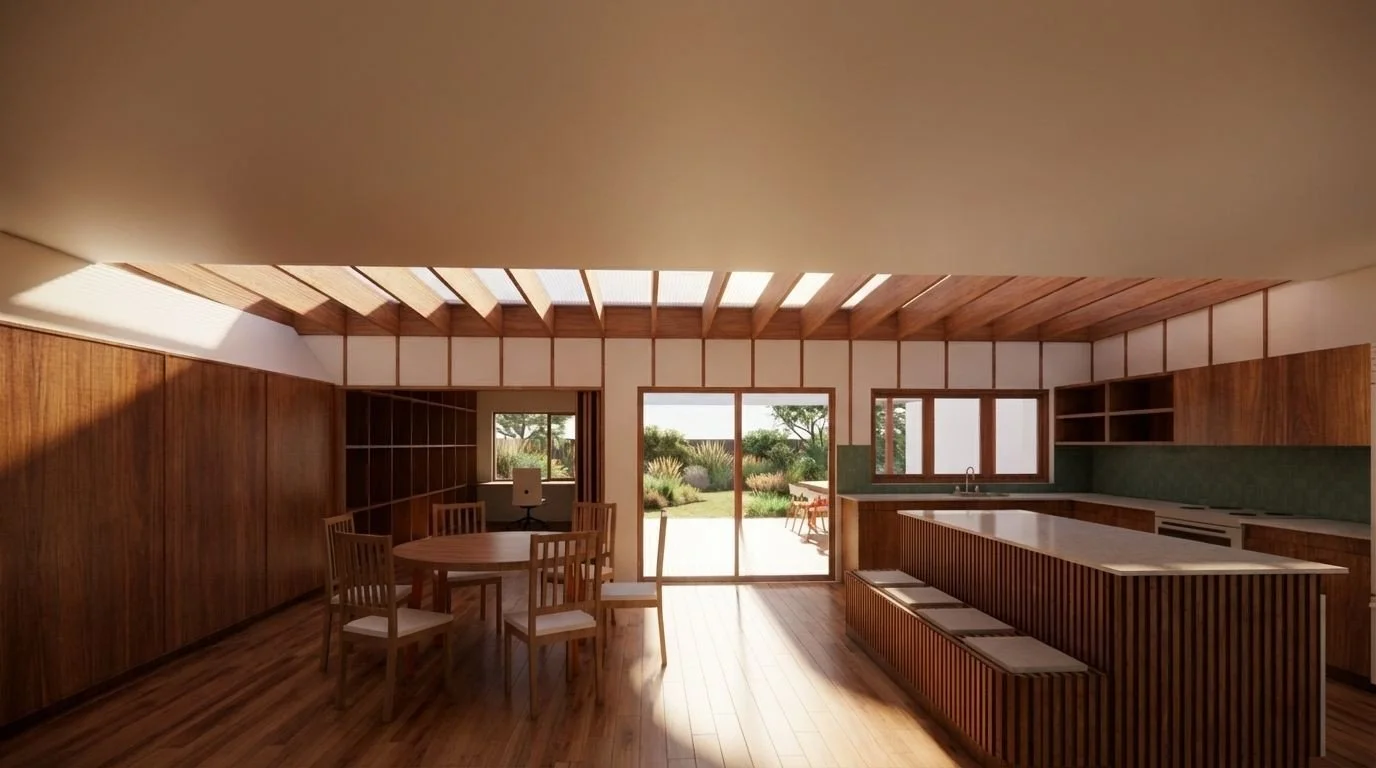 Natural materials, generous glazing, and a design that responds to its landscape. Every Dadirri project begins with the site and the relationship between the building and its surroundings.
Seven biophilic strategies for Melbourne homes
Not every biophilic strategy requires a major renovation. Some are design decisions made at the concept stage. Others can be retrofitted into existing homes. Here are seven practical approaches, ordered from the most impactful to the most accessible.
1. Orientation and daylight design
The single most powerful biophilic move in any Melbourne home is getting the orientation right. North-facing living spaces receive warm, low-angle winter sun and can be shaded from harsh summer sun with eaves or deciduous planting. This is passive solar design, and it is also biophilic design: it connects occupants to the daily and seasonal rhythms of sunlight.
For renovations, this often means relocating the main living areas to the north side of the house, even if the existing plan puts them elsewhere. Clerestory windows, skylights, and light wells can bring daylight into deep floor plans without sacrificing privacy.
2. Indoor-outdoor thresholds
Melbourne's climate supports indoor-outdoor living for much of the year. Biophilic design treats the threshold between inside and outside as a gradient, not a boundary. Sliding or bifold doors that open a living room to a garden. A covered deck that extends the kitchen into the landscape. A bathroom that opens to a private courtyard.
The key is continuity: floor materials that flow from inside to outside, roof lines that extend over outdoor spaces, and planting that is visible from multiple rooms.
3. Internal courtyards and light wells
In narrow or deep sites, common across Melbourne's inner suburbs, an internal courtyard or light well can transform the quality of a home. A courtyard brings light, air, rain, and greenery into the centre of the plan, creating a visual anchor that every room can share.
4. Natural material palettes
Material selection is where biophilic design becomes tangible. Timber, stone, rammed earth, brick, cork, wool, and linen are materials with depth, texture, and sensory warmth. They age gracefully, develop patina, and connect the interior to the natural world.
In a Melbourne context, locally sourced hardwoods (spotted gum, blackbutt, Victorian ash), recycled brick, Castlemaine slate, and rammed earth are all materials with strong biophilic and sustainable credentials. These are materials you want to touch, which is a good test of biophilic quality.
A useful rule of thumb for biophilic material selection: would you want to run your hand across it? Timber, stone, raw brick, and wool pass this test easily. Laminate, vinyl, and plastic cladding do not. Biophilic materials have depth, texture, and warmth.
5. Views, framing, and prospect
Where you place a window matters more than how many windows you have. Biophilic design treats windows as frames for specific views: a tree canopy, a garden bed, a stretch of sky. Fixed picture windows can frame a single composition. Operable windows add airflow and sound.
Prospect, the sense of being able to see a long distance from a safe position, is one of the most powerful biophilic patterns. A living room that offers a long view through a garden or across a landscape creates a deep sense of calm and spatial generosity.
6. Water and sound
Water is a powerful biophilic element, even in small quantities. A simple recirculating water feature in a courtyard introduces the sound of moving water, which masks urban noise and triggers a measurable relaxation response. A rain chain replacing a downpipe turns a rainy Melbourne day into a sensory experience rather than a nuisance.
Natural sound more broadly, including birdsong, wind in trees, and rain on a roof, is an often-overlooked dimension of biophilic design. Homes that allow these sounds in through operable windows, courtyards, and permeable boundaries to gardens are perceptibly calmer than fully sealed, mechanically ventilated spaces.
7. Greenery and living systems
Indoor plants, green walls, rooftop gardens, and integrated planting are the most visible expressions of biophilic design. Research from the Outside In Biophilic Design Playbook (2026) found that the presence of greenery alone is associated with 15% higher self-reported wellbeing.
For Melbourne homes, the most effective approach is to integrate planting with architecture rather than treating it as decoration. A garden bed built into a window seat. A planter box that forms part of a screen wall. A green roof on a garage or studio that is visible from the upper storey of the main house.
Melbourne's temperate climate, established garden culture, and strong indoor-outdoor living tradition make it one of the most natural places in Australia to design biophilically.
Melbourne's climate: a natural fit for biophilic design
Melbourne sits in NCC Climate Zone 6, a temperate zone with warm summers, cool winters, and reliable rainfall. This climate is naturally suited to biophilic design for several reasons.
Long seasons of comfortable outdoor weather. From October to April, outdoor living is comfortable for much of the day. Biophilic design leverages this by creating generous thresholds between inside and outside, blurring the boundary rather than drawing a hard line.
Strong daylight variation. Melbourne's day length ranges from roughly 9.5 hours in June to 14.5 hours in December. Homes designed with biophilic awareness respond to this variation through north-facing glazing, operable shading, and rooms that change character with the seasons.
Established garden culture. Melbourne has a deep tradition of residential gardening. Many of the city's most valued homes are valued precisely because of their relationship to a garden, whether a formal English garden in Kew, a native bushland setting in Eltham, or a productive kitchen garden in Northcote.
Native biodiversity. Melbourne's urban canopy and suburban gardens support a rich bird and insect population. A home designed to attract and support local wildlife, through indigenous planting, bird-friendly glazing, and habitat connectivity, becomes part of a living ecosystem rather than an isolated object.
The Victorian Government's Environmentally Sustainable Design (ESD) policies, adopted by many Melbourne councils, already encourage several biophilic strategies including natural ventilation, daylight access, water-sensitive urban design, and indigenous landscaping. A home designed with biophilic principles will often exceed these requirements as a natural consequence of its design approach.
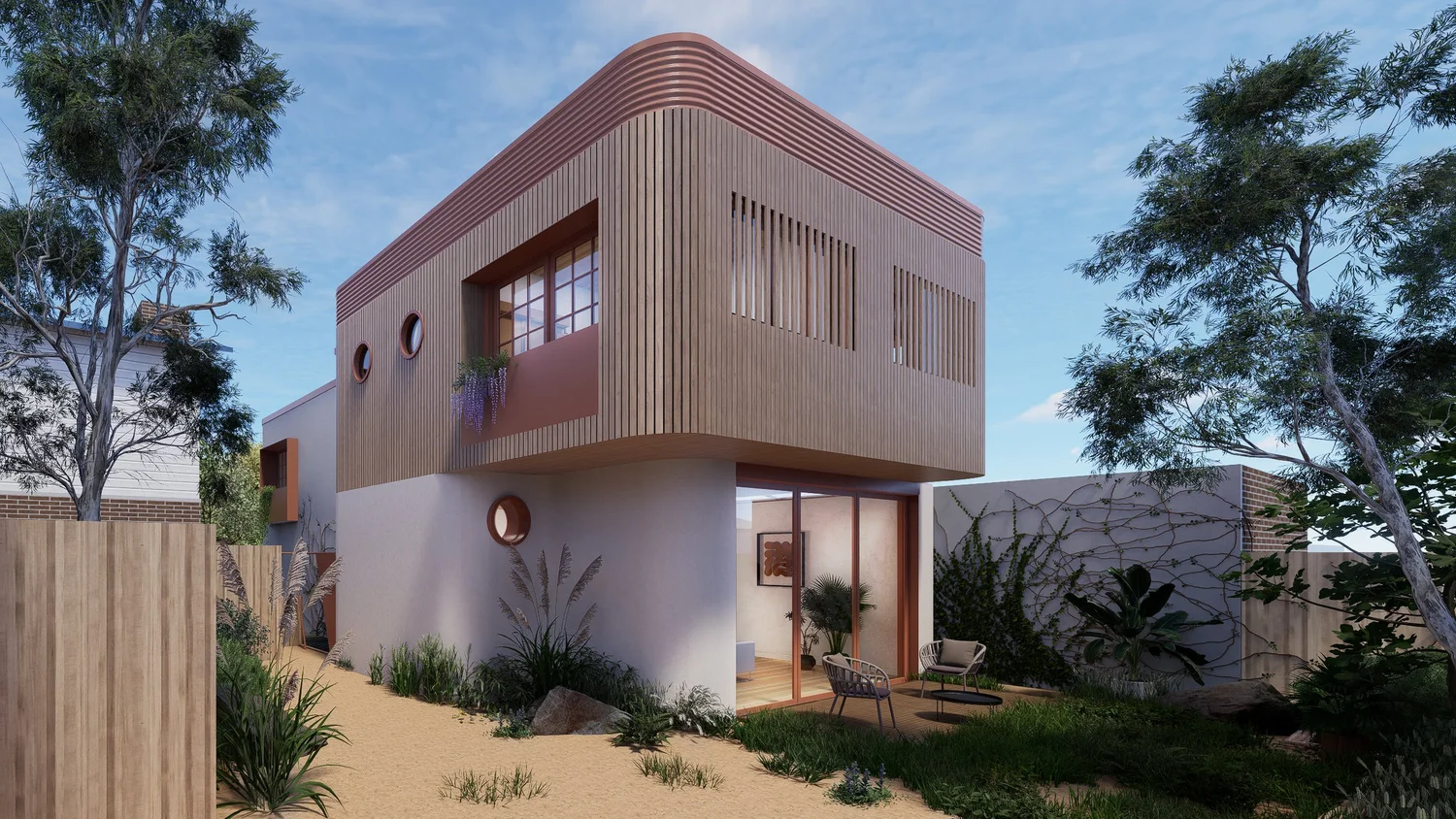 The Hempcrete Townhouse in Parkville, designed by Dadirri Architects. Planter boxes sit alongside French doors that open directly onto native landscaping, connecting indoor living with country. The hempcrete walls allow natural airflow and help filter air through the building, while the native planting strengthens the home's connection to the surrounding ecology.
Biophilic design and sustainability: where they overlap
Biophilic design and sustainable design are not the same thing, but they share significant common ground. In practice, a well-designed biophilic home in Melbourne will also be a more sustainable home.
| Strategy | Biophilic Benefit | Sustainable Benefit |
|---|---|---|
| Passive solar orientation | Connects occupants to daylight rhythms | Reduces heating and cooling energy |
| Natural ventilation | Brings in sounds, scents, and airflow | Reduces reliance on mechanical cooling |
| Natural materials | Sensory warmth and visual richness | Lower embodied carbon, longer lifespan |
| Water-sensitive design | Brings water into the sensory experience | Reduces stormwater runoff, supports irrigation |
| Indigenous planting | Creates a living, regionally connected garden | Less water, less maintenance, supports biodiversity |
At Dadirri Architects, sustainable design and biophilic thinking are treated as inseparable. Every project begins with the site, its orientation, its vegetation, its views, and its relationship to the street and the neighbourhood. The architecture grows from these conditions rather than being imposed on them.
What biophilic design costs (and where it saves)
One of the most common questions homeowners ask is whether biophilic design costs more. The honest answer: it depends on the strategy.
| Strategy Level | Examples | Cost Impact |
|---|---|---|
| Low or no cost | Reorienting floor plan north, repositioning windows to frame views, specifying operable windows, choosing timber over tiles | Design decisions, no additional cost |
| Moderate cost | Internal courtyards, light wells, extended eaves, natural material upgrades (rammed earth, recycled timber, stone) | Typically 5% to 10% above standard build |
| Higher cost | Green roofs, living walls with irrigation, large-scale water features, custom biomorphic joinery | Premium, but rarely essential for a biophilic home |
Where biophilic design saves money. Homes with good passive solar design, natural ventilation, and effective shading can reduce heating and cooling energy consumption by 30% to 50%. Over the life of the home, the energy savings often offset the cost of the design strategies that produced them. Green roofs and walls also reduce cooling loads by 20% to 50%, acting as natural insulation.
The most cost-effective approach is to embed biophilic thinking at the concept design stage, when decisions about orientation, layout, and material palette are still open. Retrofitting biophilic features into a completed design is always more expensive than designing with them from the start.
Frequently asked questions
Do I need an architect for biophilic design?
An architect is not legally required, but biophilic design depends on spatial thinking, site analysis, and material knowledge that architects are trained to provide. The most impactful biophilic strategies, such as orientation, courtyard design, and daylight planning, are architectural decisions that must be made early in the design process.
Is biophilic design just about adding plants?
No. Plants are one element, but biophilic design encompasses light, materials, spatial quality, views, water, sound, and the overall relationship between a building and its natural context. A concrete house with excellent orientation, natural ventilation, and carefully framed garden views can be more biophilic than a house full of pot plants.
How does biophilic design work in a small Melbourne terrace?
Small sites benefit enormously from biophilic strategies. A light well or internal courtyard brings daylight into a deep plan. A green wall turns a blank boundary fence into a living surface. Timber and natural materials make compact rooms feel warmer and more generous. Even a single well-placed window framing a tree canopy can transform a room.
Does biophilic design add to construction costs?
Many biophilic strategies are design decisions, not cost additions. Reorienting a floor plan, selecting natural materials, and sizing windows for daylight and views cost the same as conventional alternatives. Strategies like courtyards, green roofs, and custom water features do add cost, typically 5% to 15% of the relevant build component.
Can I retrofit biophilic design into an existing home?
Yes, though some strategies are easier to retrofit than others. Adding operable windows, installing skylights, changing to natural material finishes, introducing indoor planting, and creating a courtyard during a renovation are all achievable. Changing orientation or structural layout is more complex but is often part of a broader renovation.
How does biophilic design relate to Passive House or energy ratings?
Biophilic and Passive House approaches share a focus on thermal comfort, daylight, and natural ventilation. However, Passive House prioritises airtightness and energy performance, which can sometimes conflict with biophilic strategies like operable windows and outdoor thresholds. A skilled architect can balance both, designing a home that is thermally efficient and biophilically rich.
Is biophilic design the same as sustainable design?
They overlap substantially but are not identical. Sustainable design focuses on environmental impact: energy efficiency, material life cycle, water management. Biophilic design focuses on human health and experience: connection to nature, sensory quality, psychological comfort. The best residential architecture addresses both.
What is the best biophilic strategy for Melbourne's climate?
North-facing orientation with passive solar design is the single most impactful strategy for Melbourne homes. It provides winter warmth, summer shade (with appropriate eaves), and a strong connection to daylight throughout the year. Combined with natural ventilation and a well-designed garden, it creates a home that is comfortable, efficient, and deeply connected to its site.
Ready to design with nature?
Every project starts with a conversation. If you are thinking about building or renovating in Melbourne and want a home that feels genuinely connected to its site and its surroundings, we would welcome the chance to discuss your ideas.
Book a free initial consultationWant this guide as a PDF?
We can send you a beautifully formatted PDF version of this guide, perfect for sharing with your partner or keeping on hand as you plan your project.
Send Me the GuideReferences
- Browning, W.D., Ryan, C.O., Clancy, J.O., "14 Patterns of Biophilic Design", Terrapin Bright Green, 2014
- Frontiers in Virtual Reality, "Investigating the role of biophilic design to enhance comfort in residential spaces", 2025
- Terrapin Bright Green, "The Economics of Biophilia", 2015
- Browning, W.D., Ryan, C.O., Clancy, J.O., "14 Patterns of Biophilic Design", Terrapin Bright Green, 2014
- Ulrich, R.S., "View through a window may influence recovery from surgery", Science, 224(4647), 1984
- Victorian Health Building Authority, "HTA 003: Biophilic Design for Health Care Facilities", 2024
- Springer Nature, "A review of biophilic architectural design strategies and their effects on human wellbeing in contemporary built environments", Discover Environment, 2026
- Outside In, "Biophilic Design Playbook", 2026